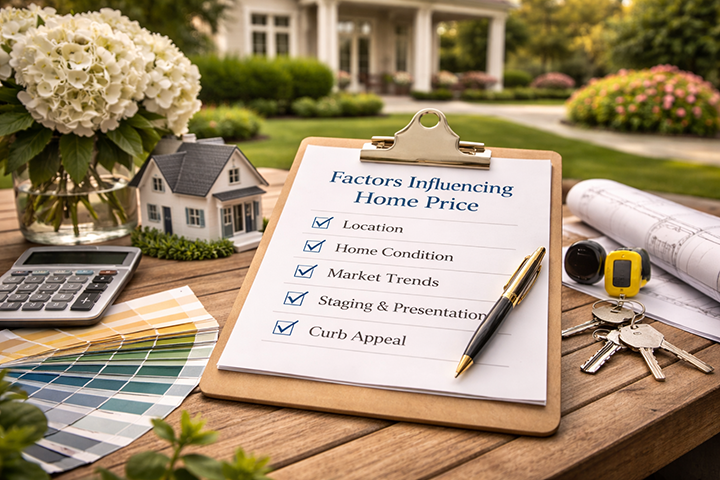
One of the most important decisions a seller makes is choosing the right asking price. While square footage, bedrooms, bathrooms, and recent comparable sales provide a starting point, buyers evaluate a home as a complete package.
Two properties with similar floor plans can sell for very different amounts based on their location, condition, presentation, timing, and competition. Understanding these factors can help a seller avoid overpricing, protect valuable market time, and position the home for the strongest possible result.
A home's market value is not determined by one feature or one formula. It reflects how buyers compare the entire property with the alternatives available at that moment.
1 Location and Immediate Surroundings
Location remains one of the most influential components of value, but it extends beyond the city or ZIP code. Buyers also consider the specific neighborhood, street, view, lot position, school access, nearby amenities, traffic, flood zone, and proximity to employment, beaches, restaurants, boating, golf, and entertainment.
Within the same community, a waterfront unit, golf-course view, corner location, top-floor residence, or property on a quiet cul-de-sac may command a different price from an otherwise similar home. Negative influences such as road noise, commercial activity, limited parking, or a less desirable view may also affect what buyers are willing to pay.
Why this matters
The most useful comparable sales are not always the closest in size. They are the properties that most closely match the subject home's location, setting, view, ownership costs, and overall buyer appeal.
2 Condition, Updates, and Maintenance
Buyers often place a premium on homes that appear well cared for and ready to occupy. Updated kitchens and bathrooms can help, but basic maintenance may be even more important. Roof age, HVAC condition, plumbing, electrical systems, windows, flooring, paint, water intrusion, and visible repairs can all influence value.
In Florida, condition can also affect insurability and financing. Older roofs, certain electrical panels, outdated plumbing, flood concerns, or deferred maintenance may increase ownership costs or make a buyer more cautious.
Not every renovation produces a dollar-for-dollar return. A highly personalized remodel may appeal strongly to one buyer and less to another. Improvements generally contribute the most when they are well executed, consistent with the neighborhood, and aligned with current buyer expectations.
- Repair visible defects before photography and showings.
- Gather permits, warranties, and improvement records.
- Address major insurance or inspection concerns when practical.
- Use neutral, broadly appealing finishes for pre-sale updates.
3 Presentation and First Impressions
Buyers begin forming opinions before they enter the front door. Landscaping, exterior condition, cleanliness, lighting, furniture placement, odors, clutter, and photography all affect perceived value.
A well-presented home helps buyers understand how the property lives. Rooms feel larger, features become easier to notice, and the home is more likely to create an emotional connection. Poor presentation can have the opposite effect even when the underlying property is good.
Online presentation is part of pricing
Most buyers first encounter a property through listing photographs, video, and online descriptions. If the marketing does not communicate value clearly, fewer buyers may schedule showings. Lower activity can eventually place pressure on the price.
Professional presentation does not change the home's physical square footage, but it can dramatically change how buyers perceive that square footage.
4 Timing and Market Conditions
The same home may receive different levels of interest depending on when it enters the market. Mortgage rates, insurance costs, seasonal demand, economic confidence, available inventory, and competing listings all affect buyer behavior.
Timing is especially important in markets with seasonal residents, vacation buyers, investors, or significant condominium inventory. A seller may face stronger demand during one part of the year and more competition during another.
The first several weeks on the market are often the most important. New listings receive increased online exposure and attention from active buyers. If the home is substantially overpriced during that period, the seller may lose valuable momentum.
5 Local Demand and Competing Inventory
Buyers do not evaluate a home in isolation. They compare it with every reasonable alternative available in the same price range. Active listings influence the competition, while recent sold properties help demonstrate what buyers have actually paid.
A home may support a stronger price when inventory is limited and several buyers are pursuing the same type of property. When many comparable homes are available, buyers can become more selective and may expect stronger condition, better features, or a more competitive price.
Demand can also vary by property type. Waterfront homes, luxury residences, condominiums, golf-course properties, entry-level homes, and investment properties may each experience different conditions at the same time.
Turning These Factors Into a Pricing Strategy
An effective pricing strategy combines recent market data with a realistic evaluation of the property's strengths and weaknesses. It should consider sold comparables, active competition, pending activity when available, days on market, price reductions, condition, improvements, location, view, and current buyer behavior.
The goal is not simply to choose the highest possible asking price. The goal is to position the home so qualified buyers recognize its value and are motivated to act.
- Review the most relevant recent sales.
- Compare the home with current competing listings.
- Adjust for condition, updates, location, and view.
- Evaluate showing activity and buyer feedback after launch.
- Respond promptly if the market does not support the original strategy.
The Bottom Line
Square footage and comparable sales remain important, but they do not tell the entire story. Buyers respond to location, condition, presentation, timing, and the alternatives available to them.
Sellers who understand these factors are better prepared to set a credible price, create a strong first impression, and make informed adjustments when market conditions change.
What Could Your Tampa Bay Home Sell For?
A property-specific market analysis can help you understand how your home's location, condition, improvements, and competition may affect its current value.
Request Your Home Value